Showing posts with label camarines norte. Show all posts

Tuesday, April 9, 2013

Calaguas: An Unspoiled Beach Destination for the Boracay-weary


 By  on April 9, 2013
When in Manila, ask any urban-dweller about the best beach in the country and you are guaranteed a popular answer: Boracay. And why not? Boracay’s blindingly white powder-fine sand and its clear, azure waters have spoilt us Filipinos. The Philippines’ top tourist destination has set the bar for beach-goers who cannot help but compare other beaches they visit with that of Boracay’s sand quality and the clarity of the water.
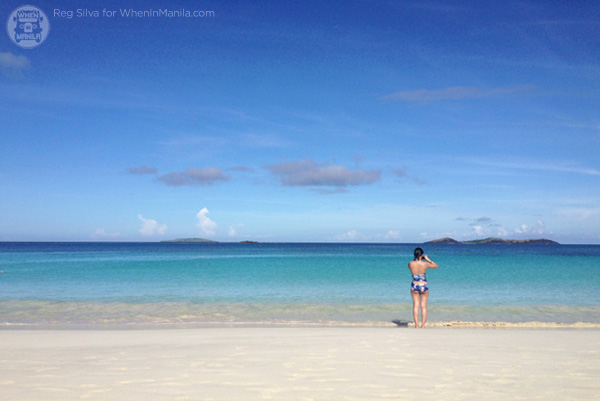
This is the unspoilt paradise that is CalaguasThis is not Boracay.

However, Boracay’s popularity comes at a price. With throngs of tourists flocking to the beach, it has been called “Manila with sand,” capturing the essence of what Boracay is like during peak seasons where the beach is so crowded that running into someone you know from Manila is a regular occurrence. With the influx of more and more foreign tourists due to the Kalibo airport now an international gateway, and the degradation of the beach due to unsustainable tourism practices, people have started looking for alternatives. Fortunately, with over 7,000 islands to choose from in the Philippines, there are plenty, and you don’t even have to fly from Manila to get to some of them.
These are the easy and obvious choices: drive down south of Manila for the beaches in Batangas, a destination known for scuba-diving. A little further south of Batangas and a boat ride away is White Beach in Puerto Galera, Mindoro. Go north of Manila and there’s Anawangin Cove in Zambales, where you can camp on a beach fringed with pine trees.
But if you’re willing to go further and off the beaten path, away from the crowds, lying off the coast of the province of Camarines Norte is a group of pristine, virgin islands called Calaguas, a reward for those who make the time and the effort to journey into the typhoon-battered region of Bicol.         
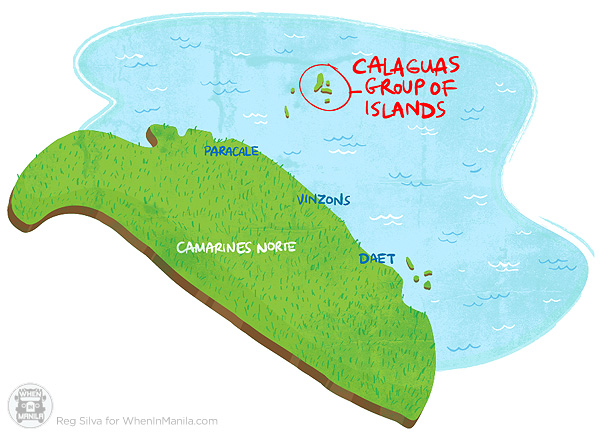
Map of Calaguas group of islands from Camarines Norte

Calaguas is a collective group of islands and islets, one of which is Tinaga Island where there’s a cove of clear, turquoise waters and an approximately 1-kilometer stretch of white sand called Mahabang Buhangin (long beach). In recent years, it has gained a bit of a cult following among beach aficionados, thanks to travel blogs and the adventurous ones who seek out the island and write about it, but mention Calaguas to just about any other person and 3 out of 5 times, you will be asked, “Where’s that?”
We set off for Camarines Norte from Manila at 10 PM, arriving in the gold-mining town of Paracale at 7 AM the next day after a few gas and restroom breaks along the way. From the port of Paracale, Calaguas is an often rough and choppy 1 1/2-hour boat ride into open seas, which can be dangerous when there’s a low-pressure area or approaching storm (of which the region encounters a lot due to its location as a battering ram for typhoons coming in from the Pacific). There was a low-pressure area that had just barely left the day we sailed off to Calaguas, and we felt its effect on our boat’s outriggers, its tips and ends dipping alternately into the sea, rocking our boat back and forth, splashing salt water on our faces.
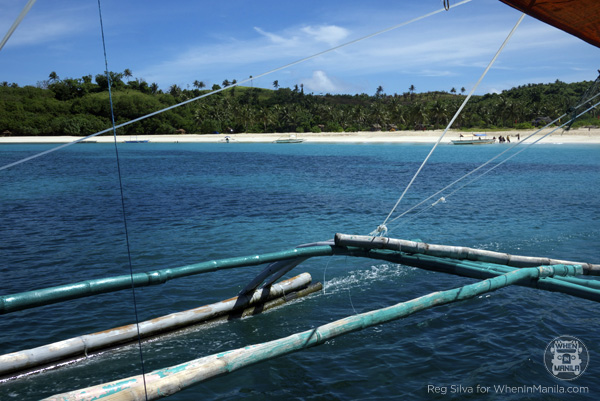
Mahabang Buhangin beach, Tinaga island, Calaguas group of islandsApproaching Mahabang Buhangin beach on Tinaga island, Calaguas group of islands

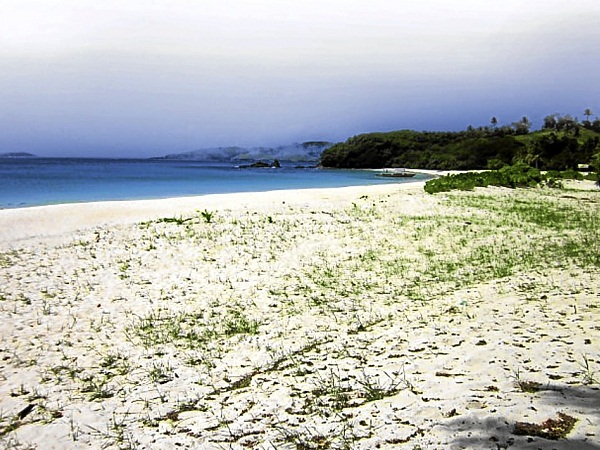
Near the island of Tinaga, on which Mahabang Buhangin lies, are a handful of other islands with lush vegetation, fringed with beautiful beaches and rock formations, all looking perfect and surreal as if they were manicured and groomed on purpose to convey the idea of paradise to approaching visitors. And paradise it is. We landed on Mahabang Buhangin, its warm waters as clear as gin, our feet sinking into silky, soft sand.

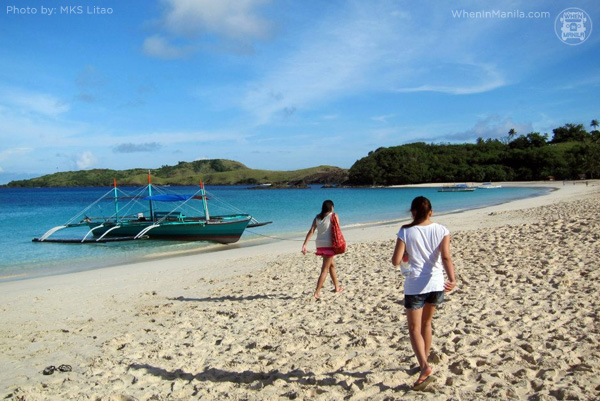
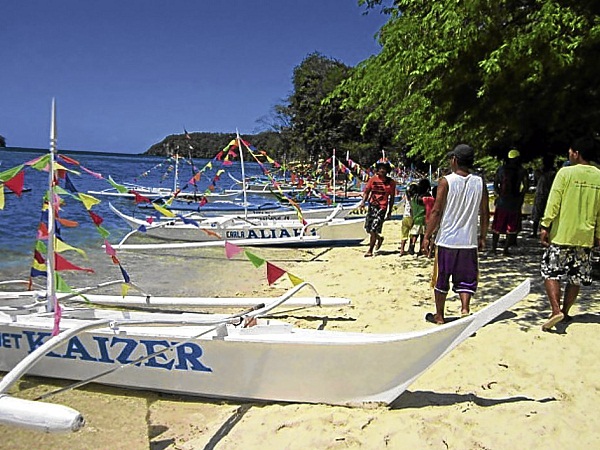
Outrigger boat to and from Calaguas
calaguas-walking-on-beach

For a beach that’s so unimaginatively-named, Mahabang Buhangin (quite a mouthful to say, so people have resorted to simply calling it as Calaguas) is an unspoiled and undeveloped destination that awaits the traveler who dares make the long and uncomfortable journey. That particular beach is often thought of as the Boracay of several decades ago, before Boracay became what it is now. With white sand just as fine as Boracay’s and water that’s as clear and as blue, it’s easy to see why. But the comparison stops there.
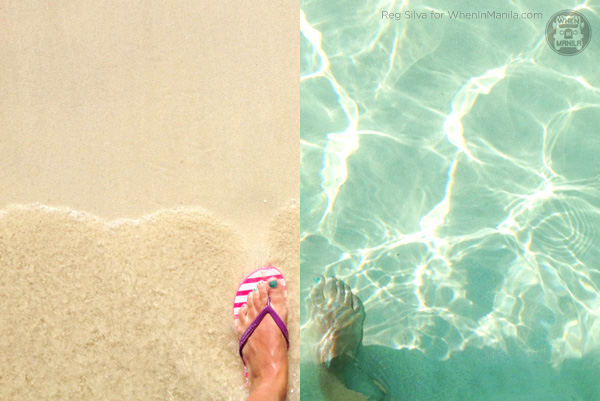
Calaguas sand and clear waterThe fine, silky sand and the clean, clear waters of Calaguas
When in Cebu City, please visit http://www.gregmelep.com for your real estate and retirement needs. Avail of the opportunity to own a condominium unit in Cebu City at the low amount of only P 9,333.33 and House and Lot @ P 7,306.81/month only. Hurry while supply of units still last. Just call the Tel. Nos. shown herein: (053)555-84-64/09155734856/09173373687/09222737836.

Friday, April 20, 2012


Island-bound in Camarines Norte

By: 

share46 45

WIDE expanse of white sand
Off the Camarines Norte coast in Bicolandia, facing the turbulent Pacific Ocean, is a captivating cluster of 17 islands—known by the generic name of Calaguas—which are becoming the buzzword in ecodestinations.
There is an invitation to the media to visit the isles from the provincial government headed by Gov. Edgardo A. Tallado, care of the provincial tourism office (e-mail come2camnorte@yahoo.com; Facebook Come To Camnorte).
And so off we go.
Entry point to Calaguas is Paracale, northwest of the capital of Daet, and that day entailed a wet and wild two-hour boat ride over choppy waters that left everybody drenched. Thank God for life vests and for those big black plastic bags which protect the equipment.

PREPARING for island-hopping
At the start, you could already discern in the distance the contours of some of the isles, becoming clearer as the outrigger boat made its agonizingly slow way, challenging the waves and the swells. The winds buffeted us. There was no real danger, however, as it was the start of summer and the weather was good.
After 90 minutes, a lone fishing boat appeared. “We are now approaching Vietnam,” said coordinator Lally Supetran. A tantalizing beach cove materialized, but this was not our destination.  Instead, the pilot swerved left and we caught a glimpse of more isles, beach coves with the obligatory white sand, rock formations, sea cliffs, vegetation, tall trees along the mountain peaks, and greenery.
Finally we reached the most attractive of the islands,  “Mahabang Buhangin” (Long Beach), aptly named because of its 1.5-km expanse of white-sand beach, the cleanest aquamarine waters we have seen in a long time, and refreshing wind.

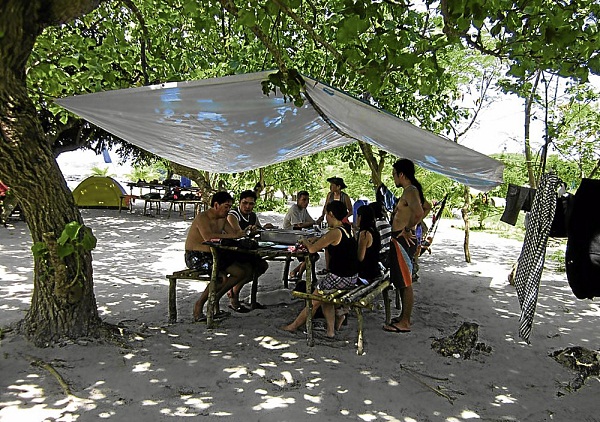
MEMBERS of the media during their “working lunch”
“Ito ang pinakamaganda dito (the best beach here),” boasted Rogelio Austria, 44, father of five and caretaker of the privately-owned island for the past two-and-a-half years. (Arrangements for visits have to be made with the provincial tourism office.) He estimated that Long Beach is about 600 hectares, with narra, coconut and other fruit-bearing trees.
Cleaner than Boracay
Crows, bats and other birds fly overhead, along with an occasional Philippine eagle. The waters here are definitely cleaner than much-ballyhooed Boracay, with its congestion, helter-skelter development, and plethora of upscale resorts.
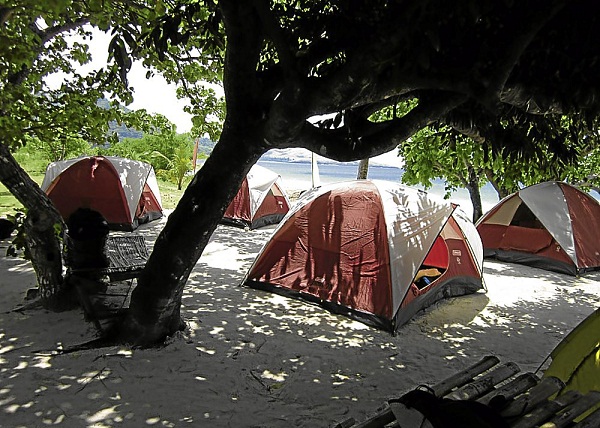
But don’t look for Boracay- or Cebu-type amenities here, because there aren’t any. Bring a tent, or rent one. The Austria family has their own hut. There are few other huts, but they are privately owned. So, aside from renting a tent or bringing a hammock, you can settle down for the night on the picnic tables and benches.

TENT city
Oh yes, there’s a moss-covered toilet.
There are no mosquitoes here because the waters are not stagnant, and the wind blows caressingly. In the afternoon the group decided to go trekking but that’s not my trip, thank you. I just opted for a decorous beer or two with the tour guides, led by the jovial Paul (who aspires to be a teacher) and the intense Steve, who were preparing dinner and pulutan (bar chow) for us.
An egret flew by and nonchantly perched itself on a carabao, and then left. Two crows were seen nearby. “Magdyowa sila (they are lovebirds),” the tour guides chorused. Yellow butterflies fluttered overhead or breezed past you.
The tour guides kindly offered me their tent, but the floor was too hard for these old bones, so I spent the night in a hammock (which turned out to be owned by colleague Kara Santos and her husband) by the beach.
My slumber was fitful, for the cold wind which swept through the isles made me shiver. But I was not one to complain for it was an experience, being my first time to stay overnight in a hammock, my companions the deserted beach, the lights from the fishing vessels, and the rhythm of the sea.
It is cool in Calaguas even during summer.

Wednesday, April 4, 2012

Camarines Norte: A stroll through history


By: 


share473 456

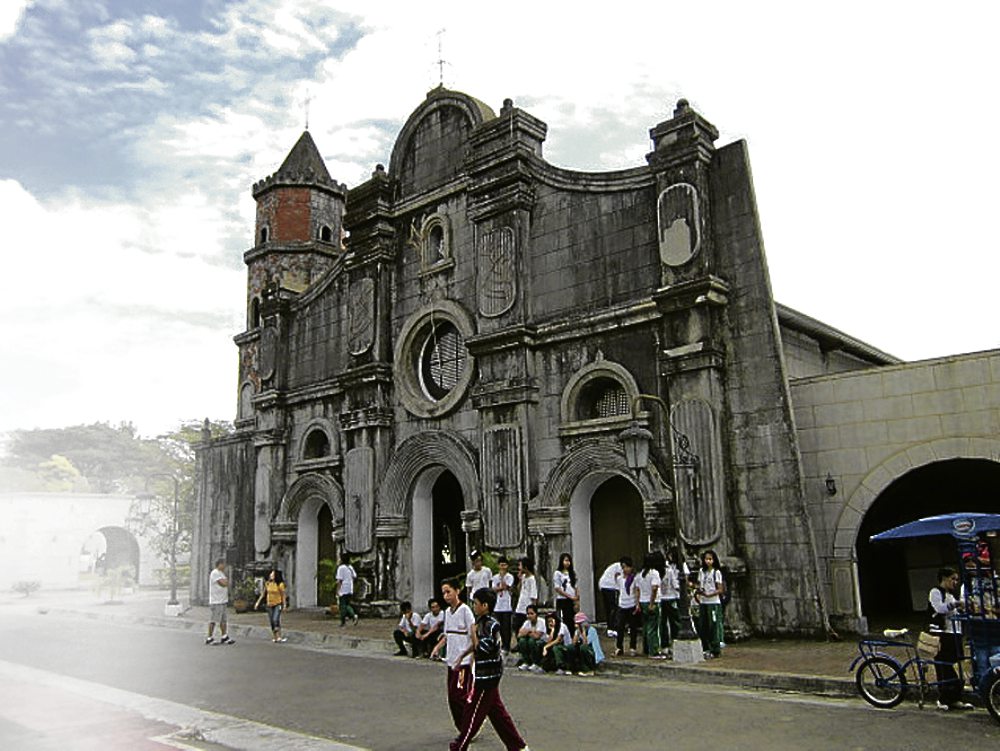
FAÇADE of historical church of Lobo
A walk in and around Daet, capital of Camarines Norte, is a stroll through history, a heritage mini-tour. There are historical churches, museums, landmarks and monuments to the past.
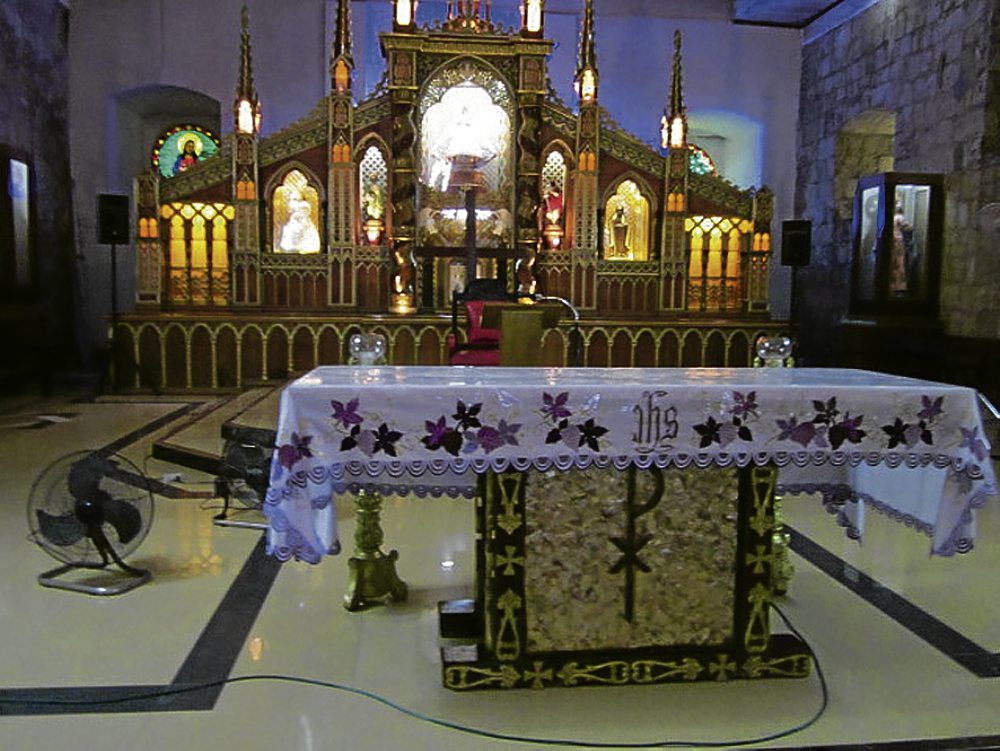
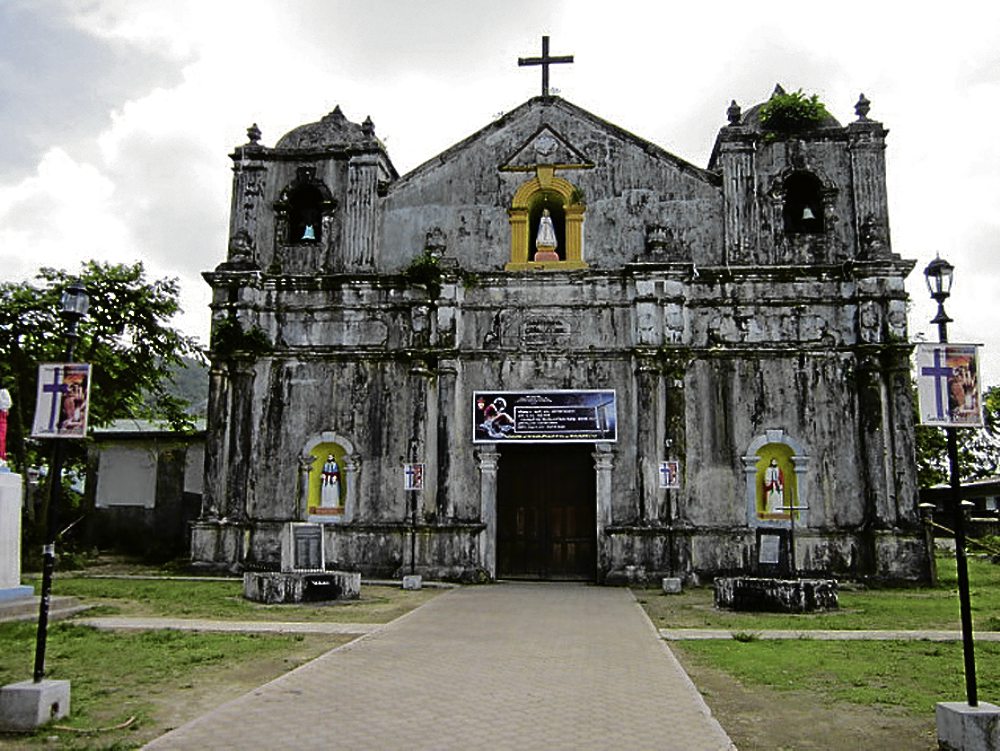
In Paracale, a town that sits on gold (said to be stolen by a former president), is the Church of Our Lady of Candelaria, which is celebrating its 400th anniversary. The parish has huge adobe blocks and strong shafts of hardwood cut from the forests during Spanish times.
The story is that Our Lady fought off invading Moros and her finger was cut off. A gold finger (shades of James Bond) was placed on her hand but this always fell off.
Our Lady would not receive the substitute gold finger, and the paint would always peel off. And so the icon was left minus one finger.
What is in the retablo (altar backdrop) today, however, is a replica.

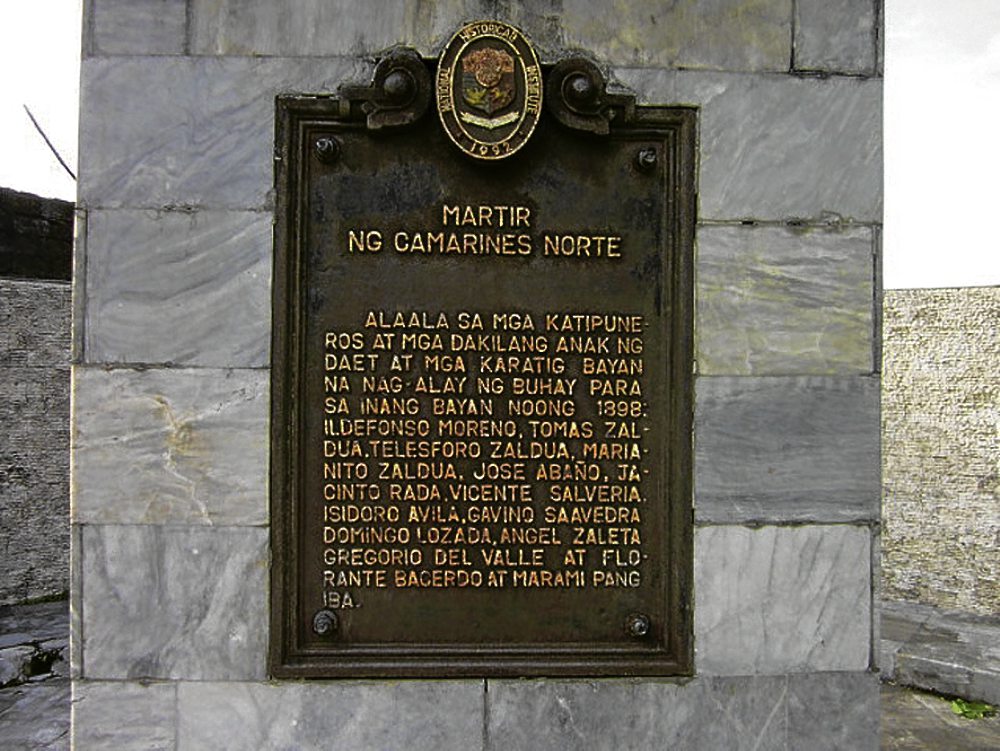
MEMORIAL to 1898 martyrs
Another cultural treasure is the Baroque Church of Labo. Its belfry has a “wedding cake” motif similar to the famous church tower in Tumauini, Isabela.
Labo also has an interesting museum.
The people of Camarines Norte, especially Daeteños, are particularly proud of the first monument to Rizal in the Philippines, which is in town plaza. A 1961 plaque of the Philippine Historical Committee notes that the monument was built through voluntary donations of the people, as solicited by Lt. Col. Ildefonso Alegre and Lt. Col. Antonio Sanz of the revolutionary army.

RUFINO Pabico ancestral house, a cultural treasure
The simple, stately and whitewashed landmark, with a golden star, is dedicated to the National Hero in Spanish: “A José Rizal.” At the base is the year the novel “Noli Me Tangere” was published: 1891. The monument was unveiled on Dec. 30, 1898.
Another shrine in the plaza honors the martyrs who fought the Spaniards and died in 1898, when the revolution against Spain resumed following the arrival of the Americans. The marker notes that the heroes defeated the Spaniards at first, but “freedom was short-lived.” Fifty names are etched on the shrine.
Cut to World War II, where the Lamitan Battle Memorial pays tribute to the gallant stand of the guerillas against the Japanese invaders in December 1941, in one of the first battles of WWII.
Nearby in the imposing provincial capitol, is the Museo Bulawan, the community museum of Camarines Norte where many activities and exhibits have taken place. What attracted the visitor from Manila was the Amorsolo Corner, a tribute to our first National Artist, Fernando Amorsolo, who grew up in Daet.

PARACALE altar and retablo
On display are 1920s magazines that published the drawings, sketches, nudes and carnival posters of the master.
Tour climax

OUR LADY of the Candles Church in Paracale
For me, the climax of the tour was a visit (actually a revisit) to the lived-in, well-preserved and grand Rufino Pabico ancestral house, with its period fountain, capiz-shell windows, Art Nouveau designs, ventanillas, tertulia piano, old paintings, azotea and other reminders of a vanished era.
The owner, Francisco Timoner, 76, welcomed us again. His maternal grandfather Rufino Pabico had built the house in 1917 and he (Timoner) had inherited it from his mother.
I had been to this house 10 years ago, accompanied by cultural-travel PR Bernard Supetran. My article  (with photo) was published in the Inquirer’s Travel Section, then edited by Rosario A. Garcellano.
Now, to my pleasant surprise, I found that Timoner had framed and laminated that article and photo, on display in the living room. “After 10 years, you must write about my house again,” said Timoner, beaming.
I promised him I would do just that.