Showing posts with label pangasinan. Show all posts

Saturday, April 6, 2013

Awesome Tour Package to Pangasinan via Byaheng Victory


 By  on April 6, 2013
When In Manila and you’re ready for an adventure, hurry and visit TravelFactor.org and check out their awesome getaways planned.
Everyone loves travelling, and each has his own reason why. Some enjoy it because of the adventure, some for the food, some for the sights, and still others to simply relax. Regardless of the reason, people enjoy the luxury of it. Thing is, not many people enjoy planning it.
Travel_Factor_Tour_Package_15
Doesn’t this picture just make you want to get up and travel else where?
Planning takes a lot of effort, especially if you’re going to a place you’ve never been to before. You have to do some research, ask around, etc. to make sure you find all the “hidden treasures”. The best thing about Travel Factor is that they can do all that for you! All you need to do is pick a date, a place and deposit your payment! Moreover, you get to meet new people! Travelling just got even easier with Travel Factor’s new partnership with Victory Liners in a joint project called Byaheng Victory!
Travel_Factor_Tour_Package_08
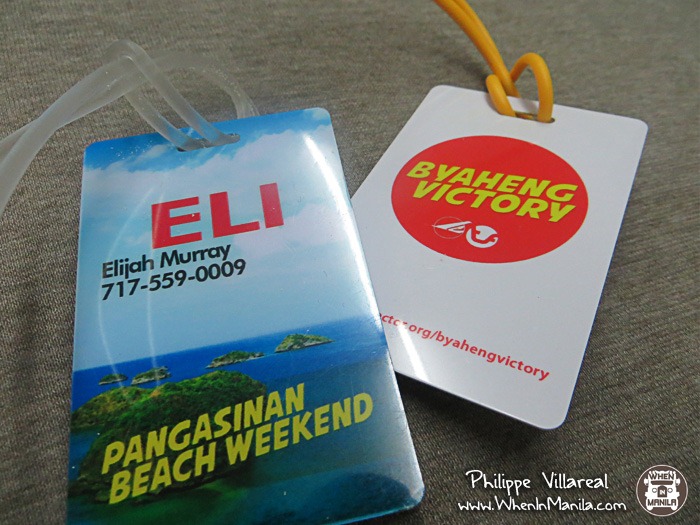
Personalized bag tag and souvenir item!
Byaheng Victory booked for Pangasinan
Our trip to Pangasinan was booked as early as February. I was extremely excited! Booking is really easy, all you need to do is visit their site, pick which adventure you want and click BOOK NOW. You can pay online via PayPal, bank deposit via BPI (Peso) and Metrobank (USD) or cash/check at the Travel Factor Headquarters. You will be sent a welcome email to confirm once they’ve received your payment.
A week before your adventure, you will be sent a primer. Everything you need to know about your trip is there. Date, time, things to bring, etc. There’s really nothing much you need to worry about!
Meet Up at Victory Liner, Cubao
We all met up at Victory Liner in Cubao. That’s where we met our guide Ma-ann Rabino. Ma-ann was very welcoming! She had this big smile on her face the moment she saw us and immediately gave us our cool personalized bag tags (photo on page 1) and asked us to sign a waiver. We were then led to our bus and off we were on our 5 hour ride to Alaminos.


Breakfast and Hundred Island Tour
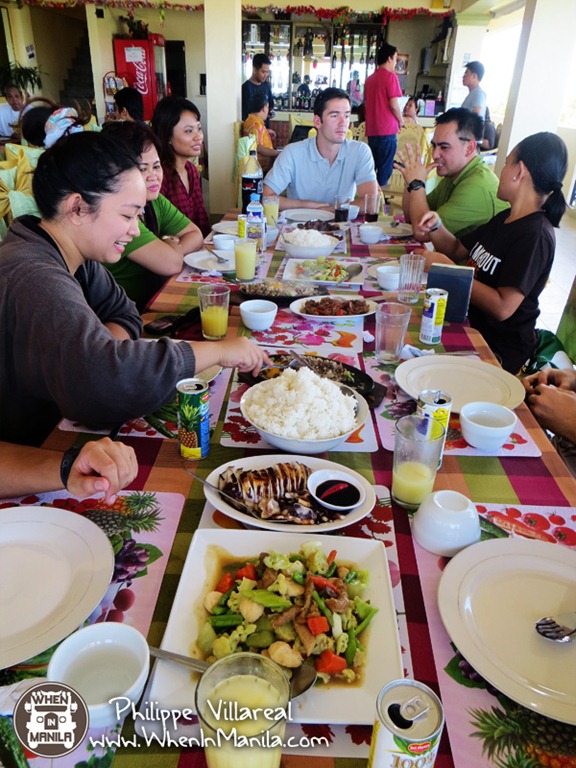
As soon as we “landed”, we had a hefty breakfast at a nearby restaurant and immediately headed off for our Hundred Island Tour. Again, everything was already pre-arranged. We just needed to follow Ma-ann to wherever it was we were going.
Travel_Factor_Tour_Package_09
Breakfast is inclusive (depends on the package)
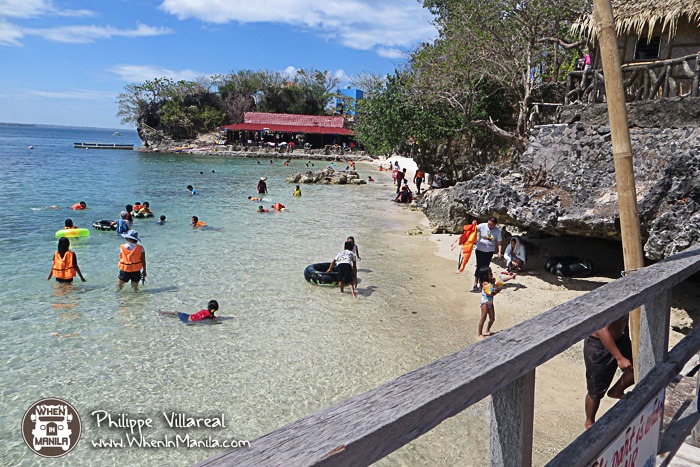
We rode our boat and sailed around a few islands. We stopped and swam on 3 or 4. Our two friend, Elijah and James even decided to go snorkeling and had the chance to see the magnificent giant clams!
Travel_Factor_Tour_Package_14
 Swimming at one of the hundred islands
One island had this cave which was connected to the ocean. You’d have to climb up and dive in!
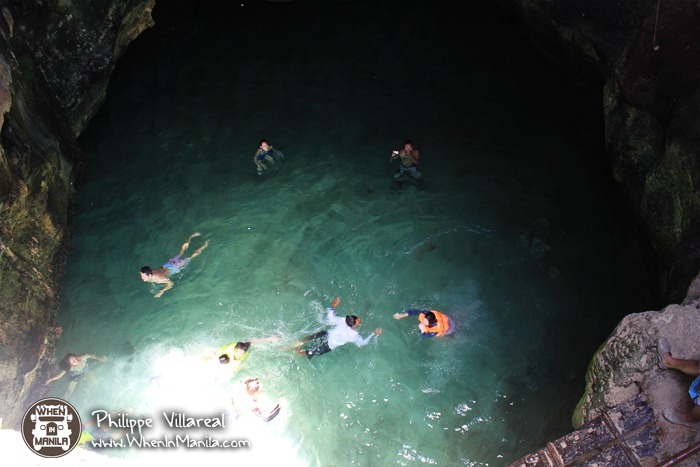
Travel_Factor_Tour_Package_11
We had the chance to climb more hills and mountains on the different islands, but my favorite would have to be Governor’s Island. Here, you get to climb to the peak where you will be able to view all 100+ islands! (There are more than just a hundred islands now) The islands were just BEAUTIFUL! The wind blowing in my hair, clear blue sky above and crystal water down below with green islands popping out every few meters. It is definitely a work of art and one you should see at least once in this lifetime!
Travel_Factor_Tour_Package_01
 Hundred Islands in the background. Astonishing ain’t it?
It was soon getting late and time to head back. The weather started to turn and it started drizzling too. Everyone was happy for the rains as it cooled us all off, but then it just got scary! While in the boat on the way back to the main island, the rain started pouring really hard! We could even see long bolts of lighting from afar. For some reason, I didn’t feel scared as I felt how confident the boatman was. Ma-ann also made sure everyone was okay and even asked us all to wear our life jackets just to be sure. I could sense she was scared but she tried her best to hide it. I loved how our entire group kept laughing the entire way back despite the fear of our boat actually sinking from the strong rains! I would say this turned out to be the highlight of the trip! Kudos to our guide Ma-ann and the boatman for being leaders during this event.
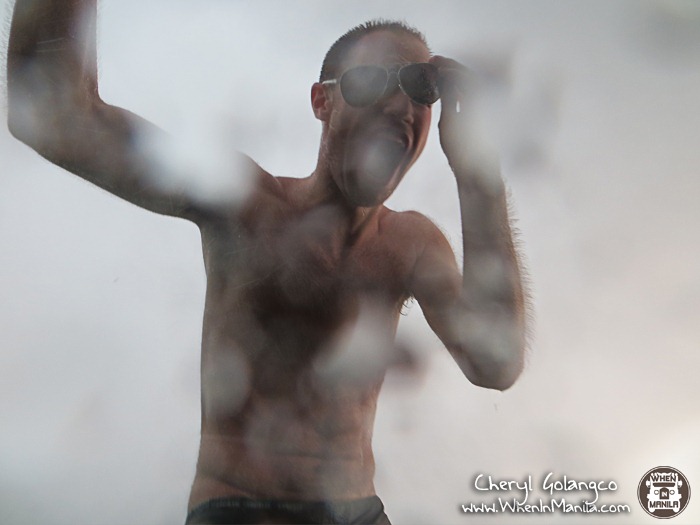
Travel_Factor_Tour_Package_02
Eli’s hair-raising reaction when the rain suddenly poured. The rain felt like hundreds of needs being thrown at us for some reason!

Check in at Villa Soledad Beach Resort
Finally settled down, had a change of clothes and rode the private van to the resort. I honestly expected a crappy resort in which we would just stay to sleep. Most people, especially travellers usually don’t mind where they stay as long as the adventure is worth it. I however can be very picky. I want my room to be just as nice as my adventure ahead, and I was thrilled to see Travel Factor took care of that as well. Our rooms were big and clean. The beds were also very comfortable with blankets I absolutely loved! The resort even had its own basketball court and 2 huge swimming pools! Absolutely divine!
Travel_Factor_Tour_Package_05
Rooms/Houses at Villa Soledad Beach Resort
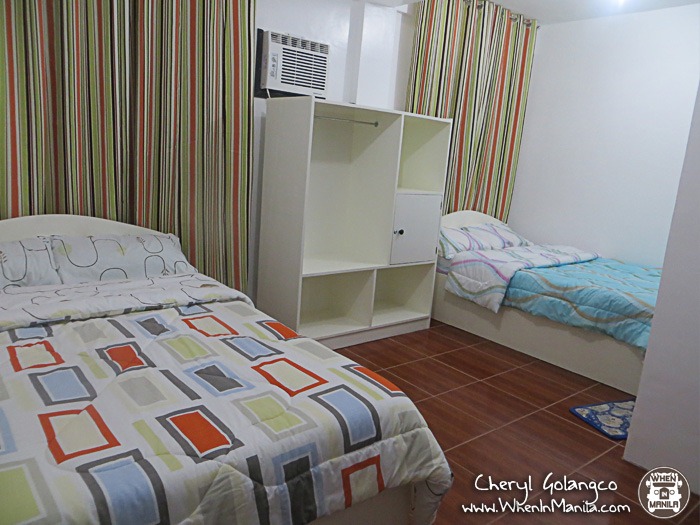

Travel_Factor_Tour_Package_03
Some rooms had 3 beds, others just 1. Ours had 2 as we were splitting the room with our friend Eli too.
Before ending the night, our tour group drank a couple of shots and bonded with a few bottles of beer and a bottle of Jack Daniel’s. It was a fun fun adventure with wonderful people!
Wake Up and Go! Bolinao tour!
Ma-Ann woke us up around 7am the following day to have breakfast and off we were to Bolinao. We were supposed to visit the waterfalls but because of yesterday’s downpour, it had to be cancelled. It was sad but of course, we all understood. Safety always comes first. We visited a nearby beach instead and a quick stroll to the light house.
Travel_Factor_Tour_Package_10
Cool lighthouse!
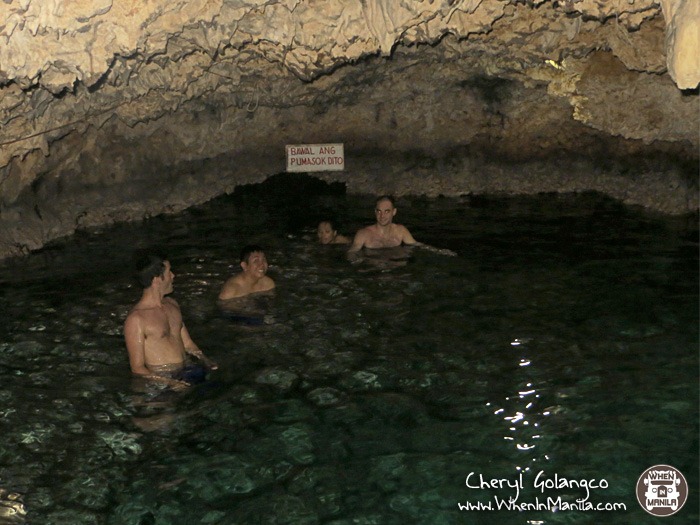
We then headed off to the ENCHANTED CAVES. Just the name itself already got everyone excited and cracking corny jokes. (hehe) We climbed a few steps up and then went slowly down to what seemed like a very small opening. Underneath however was a beautiful stream with clear blue water. Left me in awe. Just WOOOOWWWW….

Travel_Factor_Tour_Package_06
Going under to the Enchanted Caves
Travel_Factor_Tour_Package_07
Swimming in the clear blue waters
The guys swam for a while and we headed to lunch and a quick tour at the Marine Life Conservatory. There wasn’t much to see but we did see a giant clam! Soon, it was time to head home and board the Victory Liner bus back to Manila.
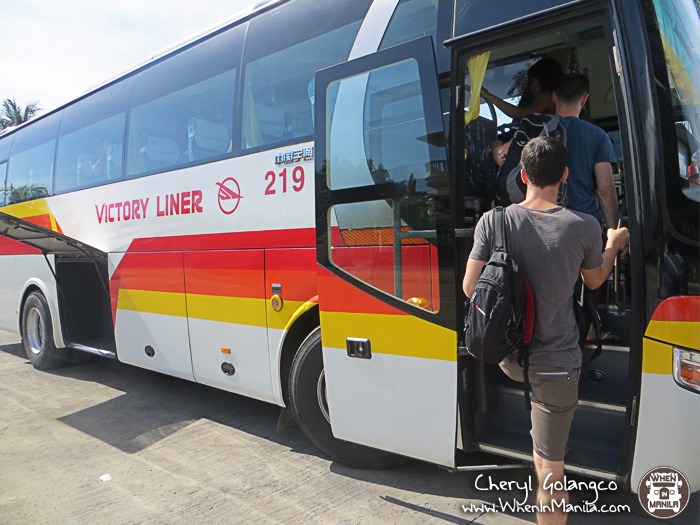
Travel_Factor_Tour_Package_04
Did I mention their buses have Wi-Fi and are high end? Aircons, TV, lamp and all!
Byaheng Victory = Success
The trip was wonderful. It was relaxing, exciting and allowed me to appreciate the Philippines even more. Seeing the hundred islands is just breath taking. Had I seen this when I was learning my history back then, I might have listened to my teacher more. Absolutely fascinating!

Travel_Factor_Tour_Package_13
Group photo! (L-R) Joseph, Ize, Ize’s mom, Ma-Ann, Adrian, James, Say, Philippe, Elijah, Me
“We abuse land because we regard it as a commodity belonging to us.  When we see land as a community to which we belong, we may begin to use it with love and respect.“ ~Aldo Leopold (1887-1948)

When in Cebu City, please visit http://www.gregmelep.com for your real estate and retirement needs. Avail of the opportunity to own a condominium unit in Cebu City at the low amount of only P 9,333.33 and House and Lot @ P 7,306.81/month only. Hurry while supply of units still last. Just call the Tel. Nos. shown herein: (053)555-84-64/09155734856/09173373687/09222737836.

Saturday, February 25, 2012

An Escape To The North


By MA. GLAIZA LEE

MANILA, Philippines — Region 1 will always have a special place in my heart.
Maybe, that's because this is where both my parents were born and raised: My father hails from Bangar, La Union, while my mother was raised in San Quintin, Pangasinan. For some time, I resided in my mother’s hometown where I finished my secondary education.
But that time, I wasn’t pleased with living in a place away from the modern luxuries I was accustomed to. For me then, living in Pangasinan meant leaving the urban lifestyle behind and trying to fit in and understand the rural culture.
I didn’t appreciate the farms, the streams and the rivers that I passed by everyday while walking to and from the school, or even the mountain ranges that loom on the horizon. And while metro people thought riding a kuliglig was a unique experience, for me, it was just a means of transportation that would take me to the market on Saturdays.
Bagoong and alamang were just normal condiments at home. Tupig, patupat, inkiwar and other native delicacies were the typical merienda. Main course would be either pakbet, igado, inabraw, dinengdeng or ar-arsusep with chopped tomatoes and onions. We were eating them so often that they seemed so ordinary, and I would take them for granted.
When I started working and living in the metro, I veered away from the things I usually did and ate while I was in the province. Later on, I started missing the provincial life. With growing up came the maturity as well as the ability to understand and appreciate things no matter how ordinary they were. I began to appreciate the putrid and salty bagoong as I dipped a slice of unripe mango in it, the sweet sticky goodness of patupat, and the earthy smell of freshly cut grass. 
Traveling up north every now and then has helped me understand my roots, little by little, one town at a time. And being a participant in the Lakbay Norte, an eight-day tour organized by the North Philippines Visitors Bureau (NPVB), in cooperation with the Manila North Tollways Corporation (MNTC) and the various Conventions and Visitors Bureaus (CVB), made me realize that there was more to Region 1 than I could ever imagine.
What's up north?
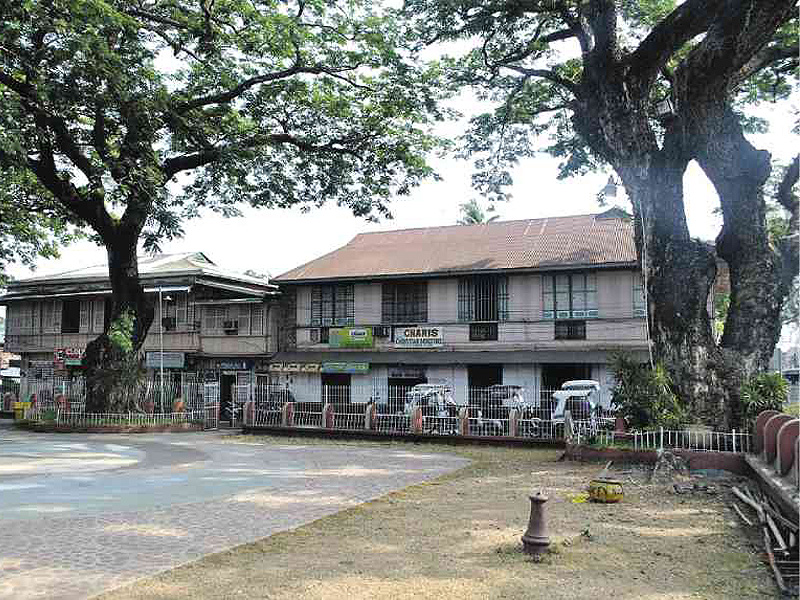
Located on the northwestern coast of Luzon, Region 1 is composed of four provinces: Pangasinan, La Union, Ilocos Sur and Ilocos Norte. Popularly known as the Ilocos Region, it is a rich repository of the country’s colonial past as evident in the numerous collections of historic and cultural edifices, some of which are declared as national cultural treasures.
Aside from its rich culture and tradition, Region 1 is nowadays hyped as an outdoor travel destination where tourists can do surfing, diving, sailing, kayaking, sand surfing, paddle boating and other sports and adventure activities.

The place with over 100 reasons to explore
The journey to Region 1 begins at Pangasinan. Considered as the third largest province in the Philippines, its crescent-shaped terrain occupies 536,818 hectares of land area, which constitutes almost one-half (41.8%) of the total land area of Region 1 and 1.8% of the total area of the Philippines.
Its name was derived from the word asin (salt). In the olden days, until today, the province has the best and finest salt beds in its coastal towns. Salt-making was one of the primary sources of livelihood in the province; hence it was known as Panag-asinan, or the place where the salt is made. It later evolved to Pangasinan.
Because of its strategic geographical location, bounded by the verdant Cordillera Mountains to the east, Zambales ranges to the west, the rich rice plains of Tarlac to the south and the Lingayen Gulf and the China Sea to the north, the province is called the Gateway to the North.
The province is home to beautiful white, sandy beaches, verdant hills, scenic terrains, caves, waterfalls, ancient Hispanic churches, miraculous destinations for devotees and a vast coastline for fishing and other water sports, or just leisurely walking along the shore to get a glimpse of the world-famous Philippine sunset.
Predominantly mountainous, Pangasinan is rooted to the earth. Agriculture remains as the major source of livelihood in the province. More than half of the local labor force is mobilized to farm the rich lands. But there are some areas where aqua-culture has become popular.
In Dagupan, for instance, farmlands have been transformed into artificial ponds for fishes like bangus and malaga. Later, fish pens were introduced. Today, the bangus industry in Dagupan produces more than half of the entire province’s production. Annually, Dagupan produces an estimated R600 million worth of bangus, out of the R1.8 billion production of the entire province of Pangasinan. Indeed, it is the “Bangus Capital of the Philippines.”
But through the years, the local government discovered that the river system was slowly dying because it contained fecal coli forms that are beyond the acceptable amounts. To prevent the river's further deterioration, the government had to adopt drastic measures. They tore down all the fish pens and cleaned the seven rivers – Patogcawen, Magueragday, Paldakit, Bayaoas, Pantal, Calmay and Tanap – that surrounded Dagupan.
Their efforts must have paid off because the locals and tourists are now enjoying the beauty of the river through the Dawel River Cruise. The one-hour cruise begins at the foot of the Dawel Bridge in Catacdang, Bonuan Gueset, runs along one of the river tributaries, and ends at the ruins of the old railroad tracks going to Damortis. As a side trip, tourists can watch how the bangus are harvested.
Where the mountain meets the sea
Approximately two hours away from Pangasinan is the province of La Union. While most tourists often flock to La Union for surfing, the province has more to offer than its surging waves. Its name indicates the union of the towns from the different provinces surrounding La Union. The province was carved from nine towns of Pangasinan, three of Ilocos Sur and several villages from the Cordilleras.
While La Union is classified as a progressive class-A province, it is still relatively young compared to Pangasinan, Ilocos Sur and Ilocos Norte. But the province, particularly San Fernando City, still remains to be the regional center.
It boasts of natural wonders like waterfalls and caves, as well as religious and cultural tourist destinations such as Our Lady of Namacpacan Church and Basilica Minore of Our Lady of Charity, among others.
Tourists are often lured here by its sandy beaches and surfing breaks, especially during weekends. So it is not surprising to see that more and more resorts have mushroomed along its shorelines, usually between Bauang and San Fernando. Take for instance Kahuna Beach Resort and Spa, a Balinese-inspired boutique resort situated at the heart of San Juan, one of the most frequently-visited surfing destinations in the Philippines.
La Union is home to the biggest cement factory in the country, managed by  Holcim Philippines. As one of the leading cement manufacturers in the Philippines, Holcim knows its responsibility to maintain sustainable development in the areas where they are operating. They aim to manage resources prudently to ensure that future generations can meet their own needs.
Environmental safety is their daily business. That’s why they invested in an environmental protection and enhancement program that includes biodiversity enhancement and progressive quarry rehabilitation. The result of this initiative is the Holcim Eco-trail, a green place amidst the quarry itself, perhaps like the oasis in the desert.
After an adventurous day of traversing and exploring the wonders of La Union, it was nice to come home to a serene yet luxurious place. Greatly influenced by the Santorini Islands of Greece, the Thunderbird Resorts is situated in a 65-hectare land area located at Poro Point, San Fernando City.
The Mediterranean-inspired resort is nestled on a scenic cliff overlooking the white sand beach and the vast South China Sea, with its stylish yet cozy suites perched up high, thus providing that panoramic view. Its distinct terrain, character and contours followed the original lay of the land and worked around the natural environment.
Northern beauty
Further up north is Ilocos Norte, right after the province of Ilocos Sur where the famous Heritage Village is located.
Dubbed as the “Gem of the Northern Plains,” Ilocos Norte is known for its scenic landscapes, unparalleled culture and traditions, and historic monuments such as the Malacañang ti Amianan (The Malacañang of the North).  Overlooking the panoramic Paoay Lake, it was built to serve as the official residence of the late president Ferdinand Marcos.
Legend has it that a village of affluent families lies beneath the still waters of Paoay Lake. Accounts say that a beggar came to the village asking for help, but no one in the village came to his rescue. As a punishment, when the beggar left, torrential rain poured and the water rose until the village was submerged. When the rain stopped, all that could be seen was a still lake, the Paoay Lake. Stories have it that the fishermen would sometimes catch fish wearing gold rings, perhaps offering a testament to the lifestyle of the people who once lived in the village.
Geological studies, however, indicate that the lake was formed by a massive earthquake that caused the ground to sink and be filled with water from underground springs.
Today, activities at the Paoay Lake National Park continue to evolve as the provincial government exerts more efforts to realize its grand tourism master plan. The government realizes its potential for water sports such as boating, kayaking and paddle boarding, where a person can traverse the freshwater lake aboard a long surfboard propelled by a paddle. The 380-hectare park is home to migratory birds such as egrets, kingfishers and Philippine ducks, among others.
For more adventure, Pagudpud is the place to be. Going there, one would pass by the Patapat Viaduct, a winding bridge built at the foot of the North Cordillera Mountain Ranges which connects Barangay Balaoi and Barangay Pancian.
Once at Pagudpud, head for Maira-ira Cove. Known as the Blue Lagoon, the cove is considered to be the pride of all the beaches in the north. The spectacular white-sand beach has nothing but simple sheds and trees for shade. Untouched and wild, the beach gives the feeling of being shipwrecked in paradise. It is a good spot for beginners in surfing because of its soft surging waves.
After tiring but fun activities, Region 1 serves sumptuous native food products. Although each province in the country has its own versions, the Vigan, Laoag and Alaminos longganisas stand out because of their distinct taste and style of preparation. Of course, there’s the bagnet and empanada. The best ones are found in Batac and Vigan. In Pangasinan, don’t leave without taking a bite of the puto Calasiao and tupig.
Good food, scenic destinations and extreme adventures – Region I is definitely in my heart

Friday, June 3, 2011

Pangasinan’s secret getaways – yes, there’s more than one


By: 

Philippine Daily Inquirer

With its four cities and 44 towns, the storied, populous province of Pangasinan recently celebrated its 431st Founding Anniversary (Agew na Pangasinan) with a myriad of activities.
These included a song-and-dance beach party, a grand ball and a civic parade around the stately Capitol grounds with street dancing, walking contingents caparisoned in imaginative costumes and a float competition.
Pangasinan is a province of spiritual healers, historical churches, festivals, caves (check out Enchanted Cave in Bolinao, with cold spring waters normally up to six ft deep), falls, and hotels and beach resorts galore.
Places to eat include Hardin sa Paraiso in Manaoag and (in Dagupan City) Park & Kim, Todd’s, and Pebble Beach Café; and in Lingayen, the Capitol Resort Hotel (for its Bolinao longganisa). Manila bus lines which go to the province (up to Bolinao) are Victory Liner and Five-Star.
As in any Philippine province, the festivals are year-round: Bagoong Festival (last week of April in Lingayen); Bangus Festival (April 30, Dagupan); Pista’y Dayat Sea Festival (May 1, Lingayen); Puto Festival (1st week of May, Calasiao); the Tribal Festival (May 16, San Nicolas); Galicayo Festival (2nd week of December, Manaoag); and the Ibtor (Adventure) Challenge (last week of December, Rosales).
Ecotourist attraction
A new ecotourist attraction is Dasoland (a family adventure park), located in a remote plantation filled with mango trees in San Vicente, Dasol, just a town away from northern Zambales. Of the huge property, 62 hectares have been developed for ecotourism purposes (e-mail dasoland@yahoo.com).
Dasoland’s features include a Nativity Village, museum, zoo, flower park, Japanese garden, Ifugao houses, butterfly garden with the winged creatures swirling around you; cactus house, mini-golf course, bicycle lane  and World War II memorabilia.
Children can go horseback-riding, swimming, or scampering around in the Play Port and playground. There are day tours and, for a longer stay, quaint cottages.
Most impressive for me was the Villa, a faithful recreation of a bahay-na-bato (ancestral home), complete with antique furniture, art-nouveau wood carvings, grand stairway and capiz-shell windows. On the second floor is a panoramic view of the surrounding landscape. The Villa offers space for cultural activities.
The emerging ecotourism center in Pangasinan is Bolinao, on the northernmost tip of the province, facing the South China Sea, with its clear aquamarine waters (during high tide, however, visitors find the waves a bit strong for swimming), caves, falls, hotels and beach resorts with white sand.
These include El Pescador, Cabrera, Punta Riviera, Dos Flores, Cocos, Rock Garden and Treasures of Bolinao.
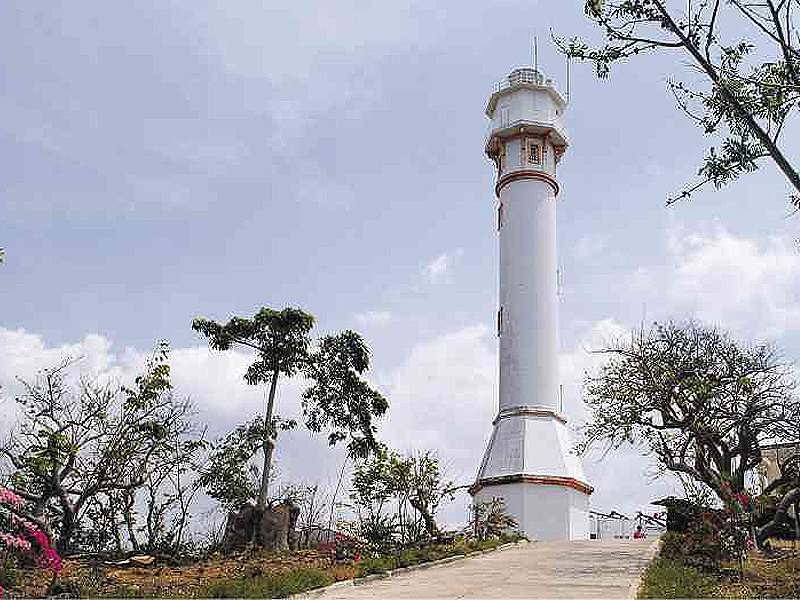
A famous landmark is the Cape Bolinao Lighthouse, built in 1905 by a British and a Filipino engineer, located 18 km  from the town proper. At 351 ft above sea  level, it is one of the tallest in the country, with 135 stairs. The lighthouse is a frequent site for location shooting, the most recent one being a movie starring Richard Gutierrez and Angel Locsin.
Down below, you can see the big, wide beach garlanded by foliage and resorts ranging from budget to standard.
Superb seascape
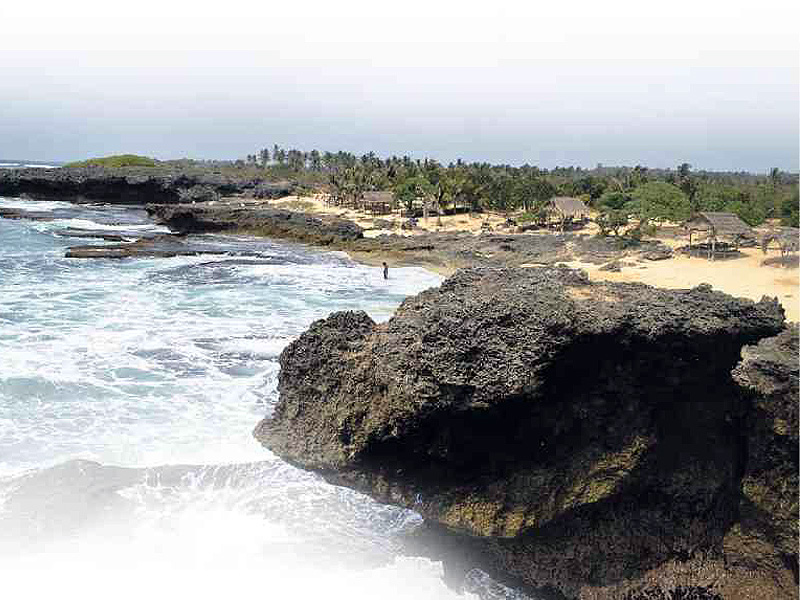
On the way to the lighthouse, an unpretentious sign Cottage for Rent led to a nondescript hillside and there was this superb seascape, boulders and rock formations, twin beach coves with the waves crashing down below us; and twin, rugged sea cliffs jutting out, almost needle sharp, into the sea.
This resort was, to our surprise, Solomon’s Paradise, owned by Australian Brett Solomon (check the Internet and his Facebook), who discovered this place in the wilderness by hacking his way through. His story is a familiar one. An adventurous foreigner comes to the Philippines, falls in love with the beauty of the archipelago, marries a local belle and proceeds to create an oasis of his dreams.
The resort has two viewpoints that are, as the media colleagues pointed out, nice spots for writing. So I felt like Heathcliff on the cliff brooding over the Yorkshire moors. Or, to make it more Hollywoodish, we felt like Leonardo DiCaprio in “Titanic”—“on top of the world.”

When in Cebu City, please visit gregmelep.com for your real estate and retirement needs.