By: Alya B. Honasan
Philippine Daily Inquirer
 So the wakeboarders have discovered the Philippines, and the surfing scene is alive and stoked. After almost 1,000 dives and 22 years of making bubbles here and abroad, I still believe that, illegal fishing and embattled coral reefs notwithstanding, our country offers some of the best diving on earth.
That’s why it behooves us to take care of our oceans, and make protecting our dive sites a national concern (please, Tourism Secretary Mon Jimenez?). Whether you’re an old water baby or a first-time visitor to these isles, whether you’re lugging a tank or just the sunblock, here are some of my favorite stops in my home archipelago.
1) Tubbataha, Sulu Sea—The Tubbataha Reefs, 182 km southwest of Puerto Princesa, Palawan, and the neighboring Jessie Beazley Reef make up the Tubbataha Reef National Marine Park, a Unesco World Heritage site, the first such completely marine heritage site in Southeast Asia.
On my last trip a couple of years ago, a manta practically bonked me on the head; on a trip before that, a whale shark the size of a bus glided by under us, and a scalloped hammerhead swam so close to me I screamed into my regulator in excitement (yes, my dive buddies heard me).
After all, you’re talking about 10,000 hectares of reefs, some 11 species of sharks, over 500 species of fish—but that also comes with rough seas, killer currents, and depths that are best left to more experienced divers.
Accessible only by overnight live-aboard boat from Puerto Princesa, a Tubbataha trip is expensive, but it can be worth every peso. No beaches here to laze around on, but sitting in a chair on the deck of your boat surrounded by nothing but water is as far from the madding crowd as you can get.
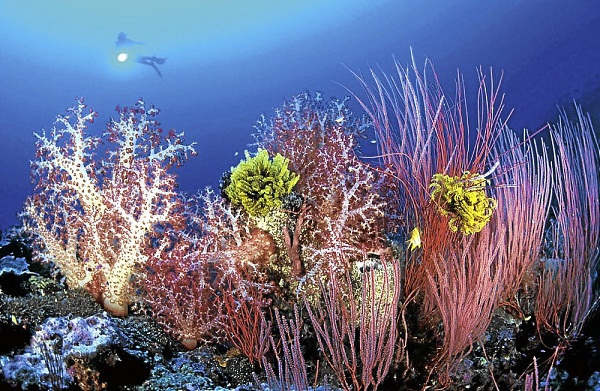
2) Anilao, Batangas—There’s no place like Anilao for many divers. It’s the new scuba-diver’s first classroom, being one of the country’s most dependable sites, only two hours from Manila, but it’s also where us old geezers like to return, again and again, for a relaxed weekend, a quick nitrogen recharge, and a hello to the critters in Twin Rocks or Sepok Wall, capped by a drink while watching the sun set behind Sombrero Island from your cozy resort.
Make no mistake, though: when the currents in Bahura decide to rip, you’re in for an adventure, and barracuda, turtle, and shark sightings are not that rare.
Also, divers fly in from all over the world—they practically shut down the resort of a good friend of mine, Club Ocellaris, a favorite annual pilgrimage site for underwater photographers—to shoot some of the world’s most beautiful soft corals and nudibranchs (think of sea slugs in psychedelic colors).
Also, while many divers pay top dollar to find thumbnail-sized pygmy seahorses in countries like Indonesia or Papua New Guinea, surprise: a good Batangueño divemaster can spot one for you in the current, hiding in the coral.
Anilao is also friendly to non-divers; although most beaches can be rocky, you can take guests for a quick stop on the beaches on Sepok or Sombrero, and the water is pretty clear. Even my late dog Banana loved Anilao—enough said.
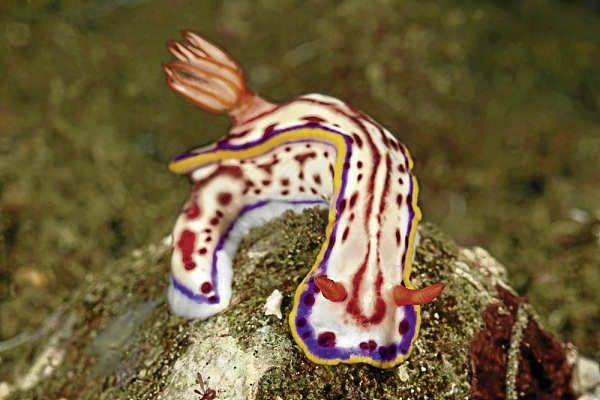 3) Puerto Galera, Mindoro—Only 150 km from Manila. Try to ignore the honky-tonk joints and noise, find a good resort, and enjoy the diving. Puerto Galera offers shallow seagrass dives with lots of photo ops, or ripping currents at famous sites like Canyons, where all kinds of fish come out to play.
Verde Island, the much-touted “center of the center of marine biodiversity,” is just across the bay; I like diving here for the currents, which are always a thrill.
Of course, if you really want to party, there’s much to do in PG; get a good massage, have a nice dinner, or head off to White Beach.
4) Apo Reef, Sablayan, Occidental Mindoro—The Apo Reef Natural Park is a 27,469-hectare natural marine park between Mindoro and Palawan, home to the world’s second largest continuous coral reef, and the largest atoll in the Philippines. It’s suffered quite a bit from the ravages of climate change and El Niño, but it’s still worth the trip.
Our friend Michael Roos of Apo Reef Club on Pandan Island can get you on a mammoth banca for an overnight trip, and you sleep on mattresses on the banca’s top deck, with just an awning between you and the stars, lulled to sleep by the sound and motion of the waves.
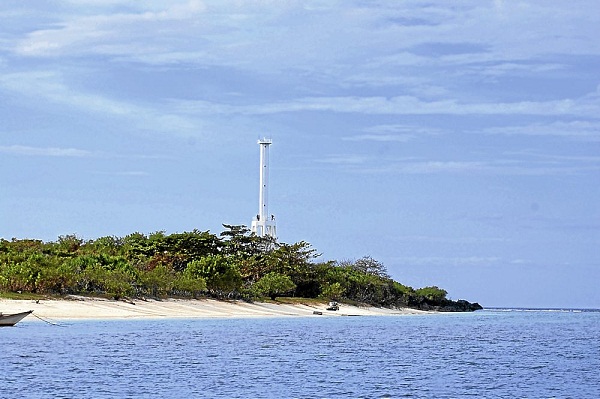
You can drop by the Park Rangers’ station on Apo Mayor, with its lighthouse, interesting mangroves, and fabulous white-sand beach. No piña coladas here, though, and limited shade; pay your park fees, get some sun, take some pictures, and get back in the water, where the colorful fish and big tuna await.
 5) Coron, Palawan—Now, this is an adventure. Get a wet history lesson by visiting World War II wrecks, Japanese supply ships that sank in the battle of Coron Bay. Wrecks are enigmatic, fascinating, and somewhat eerie, but some degree of experience is required so you don’t kick up the sand and screw up everybody’s visibility.
Book a resort or dive facility in Coron for easy access; Discovery Divers has experienced DMs, and Gunter’s Cathedral, a chamber with a stunning skylight and unbelievably clear water, was named after a transplanted German instructor.
You can also turn this into a five-star escape for beach bums by staying in Club Paradise in Dimakya Island; most of the wrecks and even Apo Reef will be some distance away, but you come home to a delightful house reef, comfy surroundings, a beautiful, private stretch of white-sand beach, and a chance to—cross your fingers—spot a dugong. Dirk Fahrenbach, boss man of Dugong Divers, says you have a big chance of seeing one on the resort’s dugong-watching trips.
Also, the lovely Dimalanta Wreck is about 25 minutes away on Dirk’s wonderful dive boats, probably the only wreck in a protected cove, so the visibility is excellent. Leave the beach bums in the resort to tan, get a massage, or just enjoy the facilities and great hospitality.
6) Boracay—Bora is better known for other water sports than the mediocre diving, and please be wary of express diving certifications that are too much of a short-cut for comfort, seriously, but that beach can still stop you in your tracks when you first see it again, all white, with a blue sky that goes on forever. In my opinion, it’s best viewed in the early morning, low season, and even in a light rain. The key is to find the least crowded spot, away from the big restos and resorts, and please don’t leave your valuables unattended.
If there are too many tourists in neon shorts, henna tattoos, and floppy hats, escape for a bit to the smaller Bulabog Beach on the other side, where the windsurfers like to catch the habagat. Quick—go get your fill before they open (gasp) mega-subdivisions on the island!
When in Cebu City, please visit gregmelep.com for your real estate and retirement needs.
When in Cebu City, please visit gregmelep.com for your real estate and retirement needs.


 Posts
Posts

